What the WaterColor Pattern Book Actually Requires — and What It Means for Your Home
If you're considering building a custom home in WaterColor, you've probably heard the Pattern Book mentioned. What you may not know is how specific it is, how binding it is, and how much it affects every decision made between the first sketch and the final coat of paint.
The Pattern Book is not a style guide or a set of suggestions. It is the governing document for all residential construction in WaterColor — reviewed and enforced by the community's Architectural Review Board, and referenced at every stage of the design and approval process. Understanding what it requires before you begin designing is one of the most important things a prospective custom home buyer in WaterColor can do.
This guide walks through the Pattern Book's most significant requirements, what they mean in practical terms, and how an experienced design and build team uses them not as limitations but as a framework for producing homes that belong here.
What the pattern book is — and why it exists
WaterColor was developed by The St. Joe Company and designed around the principles of new urbanism — a planning and design philosophy that prioritizes walkable neighborhoods, architectural consistency, human-scaled streets, and a strong sense of place.
The Pattern Book is the document that translates those principles into specific, enforceable standards. It was created at the community's founding and has been maintained and updated to govern how homes are designed, built, and modified within WaterColor.
Every homesite in WaterColor is subject to it. Every home — whether a modest carriage house or a multi-story primary residence — must be designed in compliance with it. And every design must be reviewed and approved by the Architectural Review Board before a permit can be pulled or a shovel hits the ground.
The Pattern Book exists because WaterColor's architectural identity is one of its most valuable assets. The consistency and quality of the built environment is a primary reason the community commands the prices it does and attracts the buyers it does. Protecting that environment requires enforceable standards — not suggestions.
architectural style requirements
The Pattern Book establishes a vocabulary of acceptable architectural styles for WaterColor homes. These styles are rooted in the coastal vernacular of the Florida Panhandle and the broader Gulf Coast — think Lowcountry, Tidewater, Cottage, and Creole influences — interpreted through a new urbanist lens.
In practical terms, this means homes in WaterColor are expected to reflect certain design characteristics: pitched rooflines, elevated first floors, deep covered porches, traditional window proportions, and exterior materials consistent with the community's coastal character.
Contemporary or modernist architectural styles — flat roofs, floor-to-ceiling glass facades, horizontal massing without traditional detail — are generally not compatible with the Pattern Book's requirements. This is a meaningful consideration for buyers who have a strong preference for a more modern aesthetic. WaterColor rewards buyers who embrace its design tradition, not those who want to build against it.
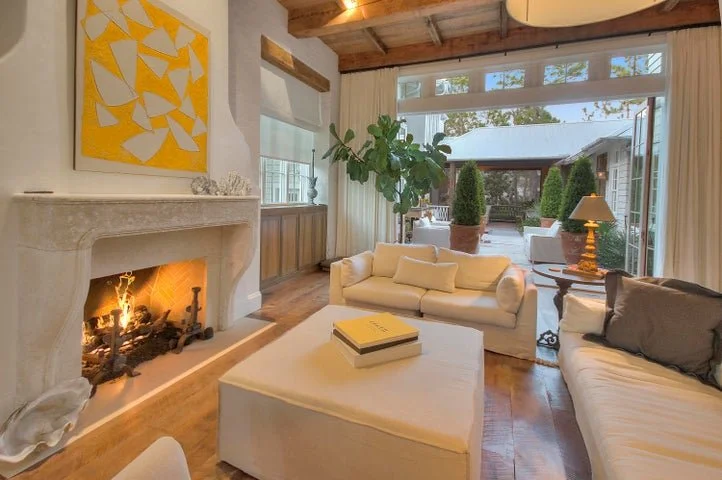
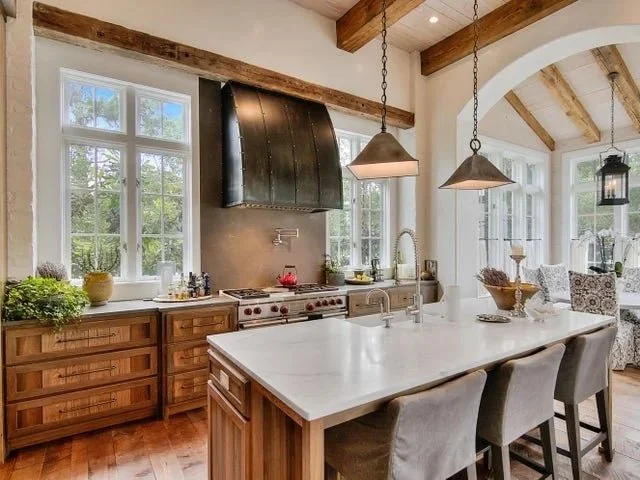
That said, within the Pattern Book's framework there is genuine design latitude. The best custom homes in WaterColor are not copies of each other. They reflect individual owners' preferences, programs, and tastes while remaining authentically of the community. That balance — personal expression within a defined tradition — is one of the more interesting design challenges the community presents.
Read our full builder guide on Watercolor here.
porch requirements
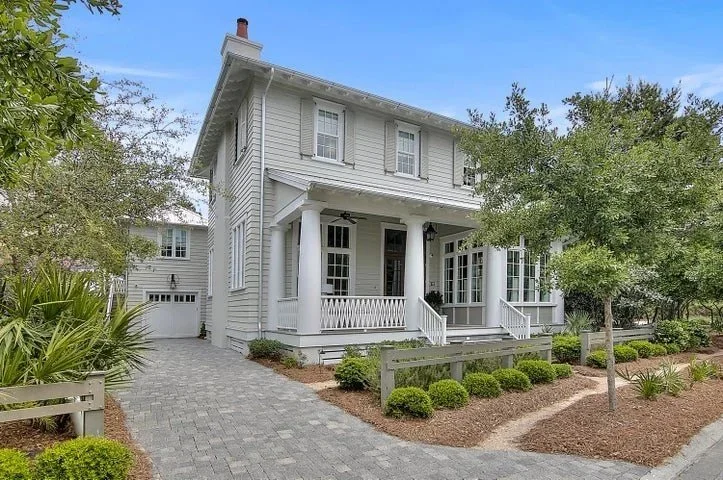
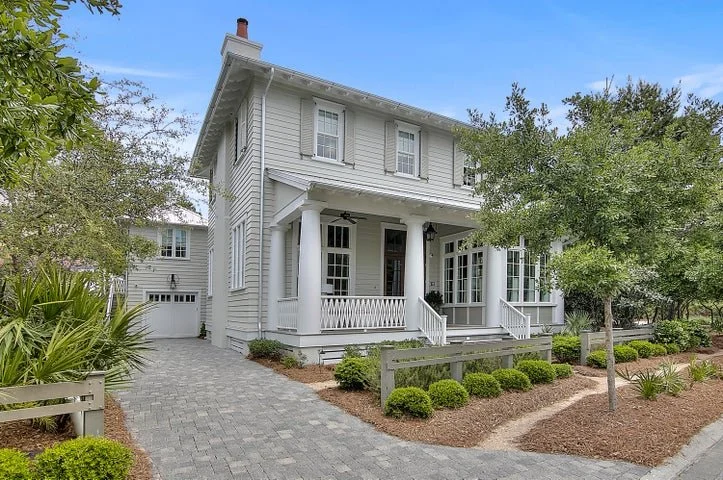
One of the most distinctive — and non-negotiable — requirements in the WaterColor Pattern Book is the mandatory front porch. Every primary residence in WaterColor must include a covered front porch that meets minimum depth and width requirements.
This is not optional and it is not a recommendation. It is a foundational element of the new urbanist design philosophy that defines the community. Front porches create the relationship between the home and the street, encourage neighbor interaction, and give WaterColor its characteristic sense of human scale and livability.
For buyers designing a custom home here, the porch must be factored into the program from the very beginning — not added as an afterthought. A porch that meets the Pattern Book's minimum dimensions but is clearly an afterthought in the design will be treated differently by the ARB than one that is genuinely integrated into the home's architecture.
The most successful WaterColor homes treat the front porch as a primary living space — deep enough to be genuinely usable, designed with the same care as the interior rooms, and oriented to the street in a way that reinforces the community's pedestrian character.
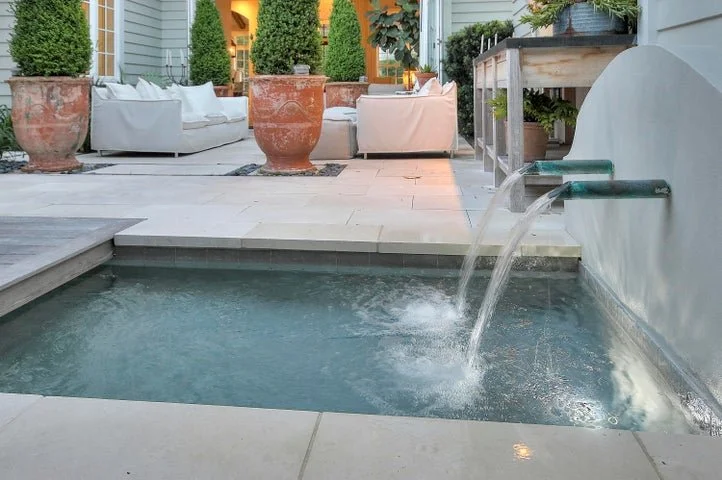
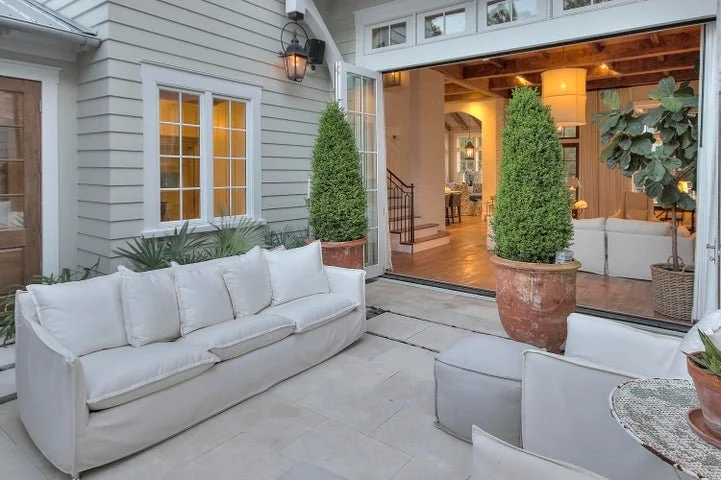
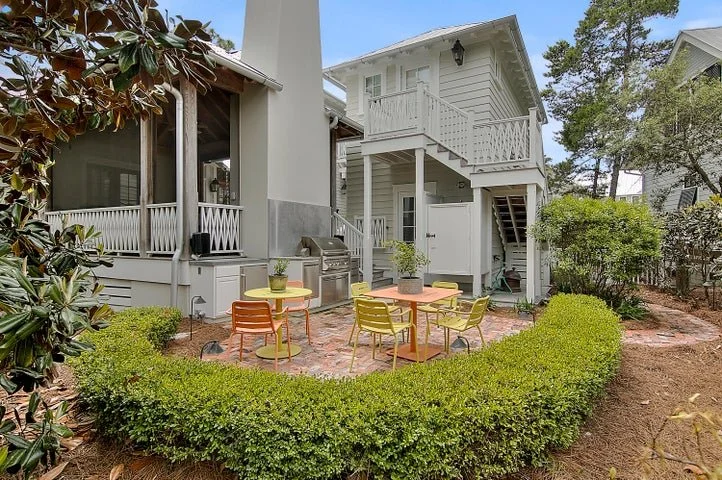
exterior materials
The Pattern Book specifies acceptable exterior materials in considerable detail. The intent is to ensure that homes reflect the character and durability appropriate to a coastal environment while maintaining visual consistency across the community.
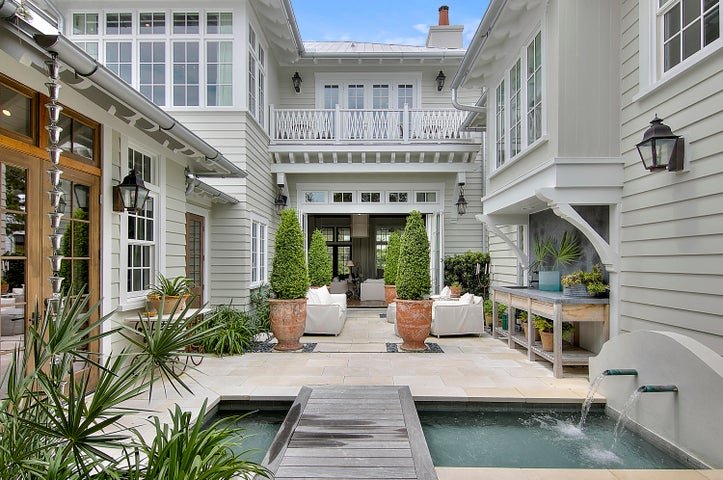
Fiber cement siding — including lap siding, board and batten, and shingle profiles — is the most common exterior cladding in WaterColor and is well-supported by the Pattern Book. Wood siding is also acceptable where appropriately detailed and protected. Stucco and masonry are used selectively, typically as accent materials rather than primary cladding.
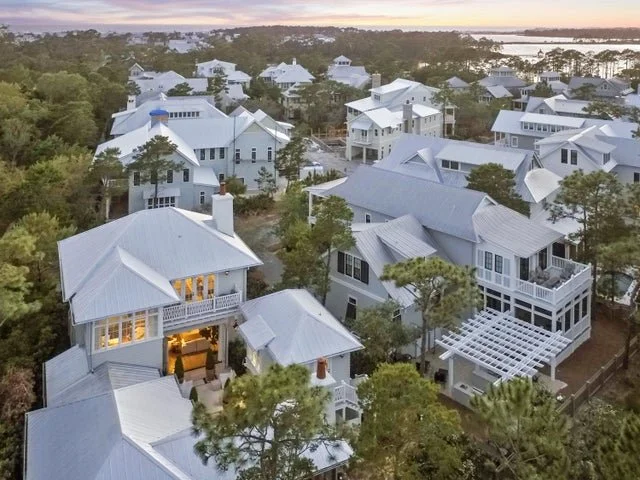
Roofing materials are similarly specified. Standing seam metal roofing is characteristic of WaterColor and one of the most popular choices among custom home buyers — it performs well in the coastal climate, ages beautifully, and reads as authentic to the architectural tradition the community is rooted in. Architectural asphalt shingles are also acceptable within certain parameters.
What the Pattern Book discourages or prohibits are materials that read as inappropriate to the community's coastal character — vinyl siding, exposed concrete block, reflective glass cladding, or materials associated with commercial or industrial construction.
Every material choice — cladding, roofing, trim, window frames, railings — must be specified in the ARB submission and reviewed for compliance. Substitutions made during construction without ARB approval can result in required removal and replacement, which is among the most expensive mistakes a homeowner can make in this community.
color palettes
The Pattern Book establishes a curated palette of approved exterior colors for WaterColor homes. These are not arbitrary restrictions — they reflect the tonal range of the natural environment surrounding the community: the warm sand, the Gulf water, the native vegetation, the coastal light.
Approved colors tend toward muted, natural tones — soft whites, warm grays, coastal blues and greens, sandy neutrals, and deep charcoals. Bright, saturated colors — vivid yellows, strong reds, loud blues — are generally outside the approved palette.
Trim colors are also specified and must be selected in combination with the primary body color to ensure a coherent, Pattern Book-compliant exterior color scheme.
Color selections must be submitted to the ARB as part of the design review. Paint chips or manufacturer color specifications are typically required. Buyers who have strong opinions about exterior color — and many do — should review the approved palette early in the design process to ensure their preferences are achievable within the community's guidelines.
Fencing and Landscape Standards
The Pattern Book's reach extends beyond the home itself to the full site — including fencing, landscaping, driveways, and accessory structures.
Fencing in WaterColor is regulated in terms of style, material, height, and placement. Traditional picket fences, board fences, and wrought iron or aluminum fencing consistent with the community's architectural character are generally acceptable. Privacy fencing along street-facing boundaries is typically restricted — the community's design philosophy favors open, engaged street frontages rather than walled-off properties.
Landscape standards require that plantings be appropriate to the coastal environment — drought-tolerant, native or naturalized species that complement the community's natural setting. Formal, manicured landscape styles that feel more at home in a suburban golf course community than a coastal neighborhood are generally discouraged.
Driveways must be constructed in approved materials and configured in ways that minimize their visual impact on the street frontage. The Pattern Book's preference is for pedestrian-scaled, porch-forward street presentations — not garage-dominated frontages.
All of these elements must be included in the ARB submission. A landscape plan, site plan showing fencing and hardscape, and driveway configuration are all reviewed as part of the approval process.
What the ARB Review Process Looks Like in Practice
Understanding the Pattern Book is necessary. Understanding how the ARB actually uses it in review is equally important.
The ARB meets on a defined schedule, and submissions must be complete and compliant with the Pattern Book's requirements to be considered at a given meeting. Incomplete submissions — missing material specifications, unresolved color selections, landscape plans that don't reflect Pattern Book requirements — will be returned without review, which means waiting for the next meeting cycle.
When a submission is reviewed, the ARB evaluates it holistically. A home that meets every individual Pattern Book requirement but doesn't feel like a WaterColor home — because the massing is wrong, the porch isn't genuine, or the materials are technically acceptable but visually mismatched — may still receive revision requests. The ARB has latitude to evaluate design quality, not just checklist compliance.
This is where working with a builder who has submitted and received approval for multiple homes in WaterColor becomes genuinely valuable. Knowing what the ARB responds to, how to frame a submission, and what questions to answer proactively before they're asked reduces the risk of revision requests and the timeline extensions that come with them.
Working With the Pattern Book Rather Than Against It
The most common mistake buyers make when they first encounter the Pattern Book is treating it as an obstacle. The builders and architects who produce the best homes in WaterColor treat it as a framework — one that, when engaged with seriously and creatively, produces homes that are more resolved, more coherent, and more authentically connected to the place they're built in than they would have been without those constraints.
The Pattern Book doesn't tell you what your home has to look like. It tells you what tradition your home needs to belong to. Within that tradition, there is substantial room for individual expression — in program, in spatial quality, in material refinement, in the details that make a home feel specific to the people who live in it rather than generic to the community it sits in.
Getting that balance right requires experience with the document, a design sensibility that respects the tradition it's rooted in, and a builder who has navigated the approval process enough times to know where the real constraints are and where the real opportunities lie.
To learn more about building in the community, visit our full guide here.
Minchew | Design + Build has built multiple custom homes in WaterColor, including projects in the community's Park District and along its most desirable streets. If you're considering a build in WaterColor and want to understand what the Pattern Book means for your specific homesite and program, reach out to start the conversation.