
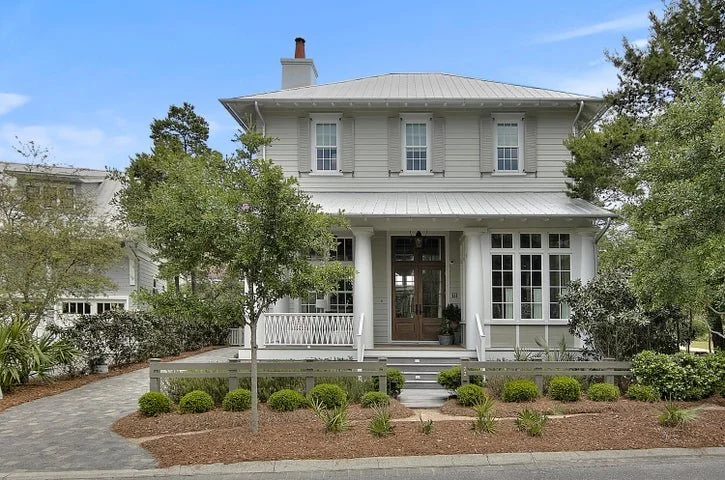
Building a Custom Home in WaterCOLOR
WaterColor is one of the most celebrated communities on Florida's Scenic Highway 30A — and one of the most studied examples of new urbanist coastal design in the country. Spanning roughly 500 acres between Western Lake and the Gulf of Mexico, it offers a rare combination of walkable streets, exceptional architecture, and direct beach access that few communities anywhere can match.
Building a custom home in WaterColor is a different process than building in a standard residential neighborhood. The community's architectural standards are among the most detailed and rigorously enforced on 30A. Homesites are limited in size and governed by strict build envelope requirements. And the expectations of the buyers who choose WaterColor (for design quality, material standards, and finished execution) are consistently high.
For homeowners considering a build here, understanding these details before the process begins is essential. The following overview outlines what buyers should know before breaking ground in WaterColor.
Understanding the watercolor Design Review Process
Every custom home built in WaterColor is subject to a formal architectural review process administered by the WaterColor Community Association. This process is among the most thorough on 30A — and for good reason. WaterColor's architectural identity is one of its most valuable assets, and the review process exists to protect it.
Before construction can begin, home designs must be submitted and approved by the Architectural Review Board. Plans are evaluated against the community's detailed Pattern Book — a set of design standards that governs everything from building massing and roofline profiles to exterior materials, color palettes, porch requirements, and landscape design.
The Pattern Book is not a suggestion. It is a binding document, and submissions that don't align with its standards will be sent back for revision. Understanding what the Pattern Book requires before design begins — not after — is one of the most important things an experienced WaterColor builder brings to a project.
Working with a team that has navigated this process before reduces the risk of revision requests and the delays that come with them.
HOA NUANCES
WaterColor's HOA and Architectural Review Board maintain some of the most detailed design and construction guidelines on 30A. Buyers building here should understand the key considerations before purchasing a homesite.
-
All home designs must be submitted to and approved by the ARB before construction can begin. The Pattern Book governs this process and is the authoritative reference for all design decisions. Submissions that don't meet Pattern Book standards will require revisions before approval is granted.
-
WaterColor's Pattern Book specifies architectural styles, acceptable exterior materials, roofline requirements, porch and balcony standards, color palettes, garage placement, fence types, and landscape guidelines. It is specific, detailed, and non-negotiable. Every design decision — from the front elevation to the side yard fence — must be made with the Pattern Book in hand.
-
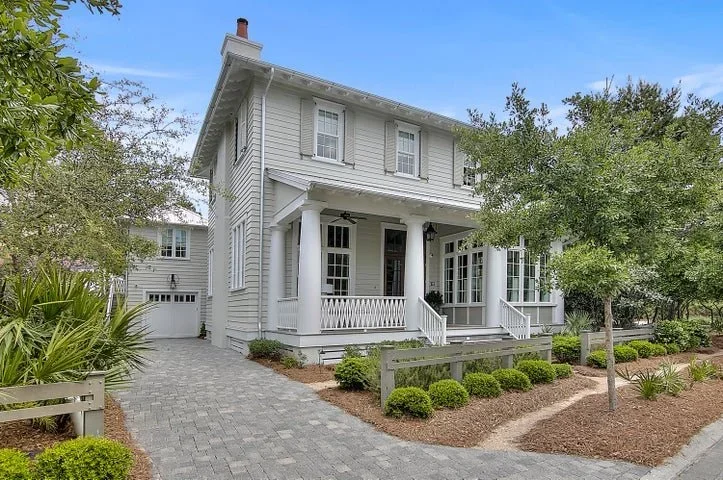
WaterColor homes are expected to reflect a consistent coastal vernacular. Fiber cement siding, metal roofing, board and batten details, deep covered porches, and natural landscape materials are characteristic of the community. Deviations from the established aesthetic require specific ARB justification and are rarely approved.
-
WaterColor permits short-term vacation rentals in most areas of the community, which makes it one of the more rental-permissive neighborhoods on 30A. For buyers who intend to generate rental income when the home is not in personal use, this is a meaningful consideration. It also shapes the buyer profile and resale market — WaterColor homes attract both primary residents and investment-minded buyers.
-
Builders operating in WaterColor must comply with HOA rules governing construction hours, jobsite cleanliness, contractor parking, and staging. These requirements protect the experience of existing residents during active construction. A builder already familiar with these protocols avoids the friction that comes with first-time compliance.
Lot Constraints in Watercolor
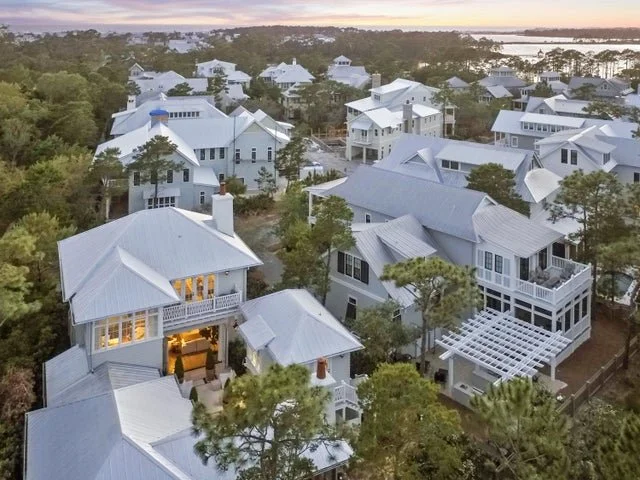
WaterColor homesites are among the most constrained on 30A — and understanding those constraints before purchasing is critical. The community's density and design standards mean that the buildable area on any given lot is often smaller than the lot size suggests.
-
Front, rear, and side setbacks are strictly defined and enforced. In WaterColor, these setbacks are often more restrictive than county minimums, and combined with other lot-specific restrictions, they can significantly reduce the effective build envelope.
-
WaterColor's Pattern Book specifies maximum building heights that vary by location within the community. Homes near Western Lake or in proximity to the beach may face additional height restrictions designed to protect view corridors and maintain neighborhood scale.
-
Restrictions on the total area covered by structures, driveways, pool decks, and hardscape are common in WaterColor and particularly relevant on smaller lots. Pool placement and deck sizing must be carefully coordinated within these limits from the earliest stages of design.
-
WaterColor lots tend to be smaller than those in communities like Watersound Origins or WaterSound Camp Creek. Fitting a meaningful custom home program — with outdoor living space, a pool, and a carriage house — into a WaterColor homesite requires disciplined design. Every square foot matters. Working with an architect who understands how to maximize a tight envelope without compromising livability is essential here.
Early site analysis with an architect and builder familiar with Origins will help identify these constraints before they become surprises.
-
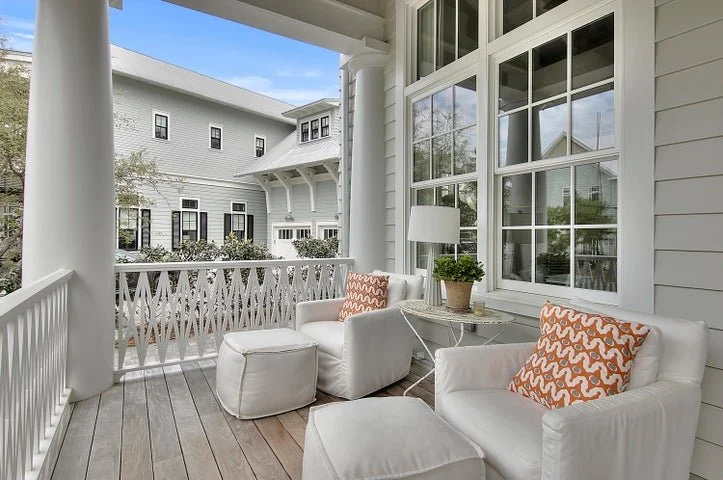
Unlike most communities, WaterColor actually requires covered front porches on homes — it's a defining feature of the Pattern Book's new urbanist design philosophy. Porches must meet minimum depth and width requirements. This is not optional and must be accounted for in the design program from the start.
what makes watercolor different to build in
WaterColor is not simply a community with rules — it's a community with a design philosophy. The Pattern Book is rooted in the principles of new urbanism: walkability, front porch culture, architectural consistency, and a strong relationship between homes and the street.
This means that building in WaterColor isn't just about meeting standards — it's about understanding and working within a design tradition that has made the community one of the most recognizable and desirable addresses on 30A.
The best custom homes in WaterColor work with this tradition rather than against it. They meet the Pattern Book's requirements not as a constraint but as a framework — one that, when handled well, produces homes that feel distinctly of this place.
That kind of design fluency takes experience. It's the difference between a home that just passes review and one that earns its place in the community.
Our Process
Design + approvals
4–8 months
This phase includes site analysis, architectural design development, Pattern Book compliance review, ARB submission and approval, and permitting.
In WaterColor, the Pattern Book review adds a layer of design discipline that needs to be built into the process from the beginning — not treated as a final checklist. Submissions that don't reflect deep familiarity with the Pattern Book are likely to require revisions, which extend this phase.
Construction
12–18 months
Once permits are issued, construction can begin. WaterColor's lot sizes and density mean that construction logistics — staging, contractor access, material storage — require more coordination than on larger, more open homesites. Timeline is also affected by the complexity of the home, material lead times, and supply chain conditions. Buyers should plan for the full arc of this process from the beginning.
What Custom Home Buyers in Watersound Origins Are Prioritizing
Buyers choosing to build custom in Origins tend to have clear design priorities that go beyond what production builders offer in the community.
Outdoor Living within a Tight Envelope
WaterColor's homesites are smaller than most 30A communities, but buyers still expect resort-quality outdoor living. Covered porches — required by the Pattern Book — become a primary living zone. Private courtyard pools, rooftop terraces, and screened living areas are among the most requested features for buyers working within the community's footprint constraints.
Rental Income Optimization
Because WaterColor permits short-term rentals, a meaningful share of custom home buyers here are thinking about rental performance alongside personal use. Design decisions — bedroom count, sleeping capacity, pool quality, outdoor entertaining space — are often made with both audiences in mind.
Carriage Houses and Guest Accommodations
Many WaterColor homesites accommodate a carriage house or detached garage with living space above. For buyers who want a rental income stream or private guest accommodations, this is one of the most valuable program elements available on a WaterColor lot. These structures are also subject to Pattern Book review and must be designed to complement the primary home.
Timeless Architecture over Trends
WaterColor's Pattern Book enforces a consistent architectural language that naturally filters out trend-driven design choices. Buyers who build here tend to appreciate this — they're investing in an address with long-term cachet and want their home to feel as appropriate in twenty years as it does today.
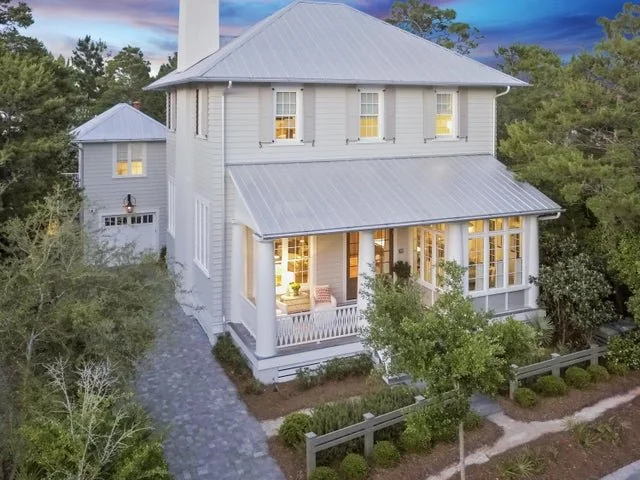
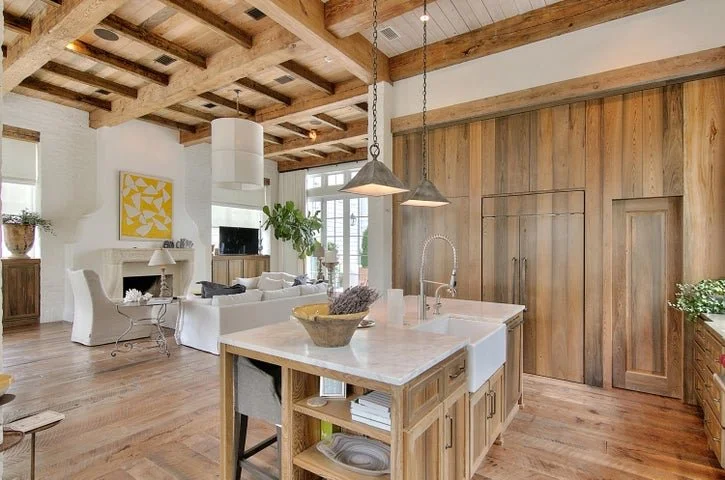
A RECENT HOME IN WATERCOLOR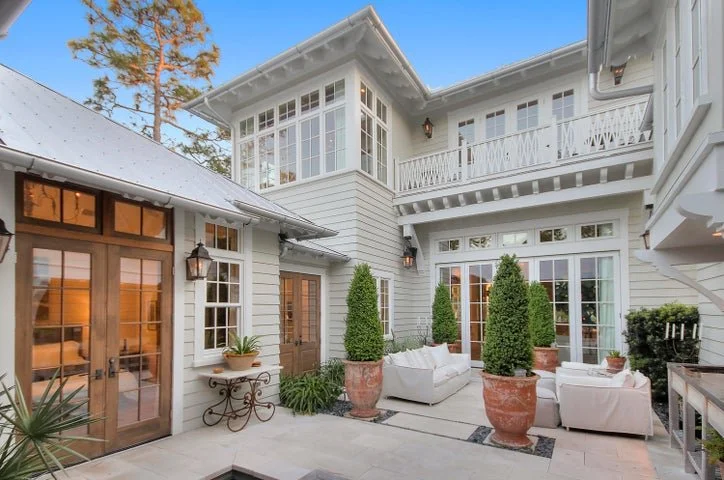
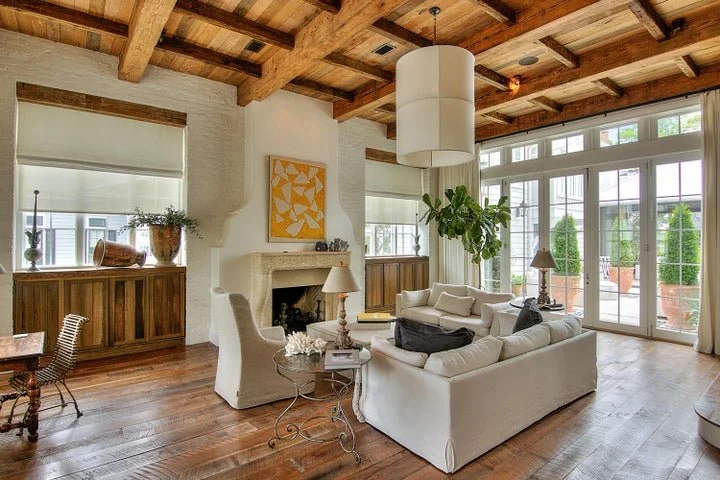
72 FLATWOOD
Choosing the Right Builder for watercolor

Building in WaterColor requires a builder who understands the Pattern Book, has navigated the ARB process, and knows how to maximize a constrained homesite without compromising the quality of the finished home.
The Pattern Book is specific enough that a builder without direct WaterColor experience will almost certainly encounter revision requests, delays, and design compromises that an experienced team would have avoided. In a community this detailed, that experience isn't a luxury — it's the difference between a smooth project and a difficult one.
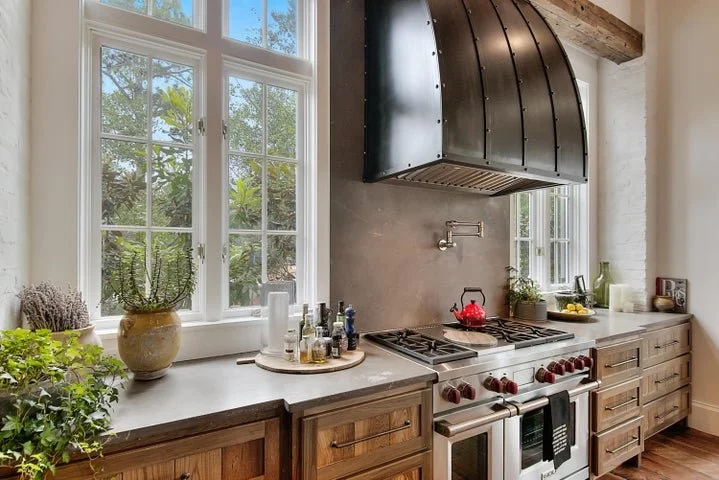
Minchew | Design + Build has built multiple custom homes in WaterColor — including 152 Climbing Rose, 50 Climbing Rose, and 72 Flatwood — and has a direct understanding of what the community's review process requires and what its buyers expect.
Our approach is straightforward: disciplined design, honest process management, and finished homes that belong in the communities we build in.
Let’s Work Together
If you're interested in working with us, complete the form with a few details about your project. We'll review your message and get back to you within 48 hours.