Building a Carriage House in WaterColor: What to Know
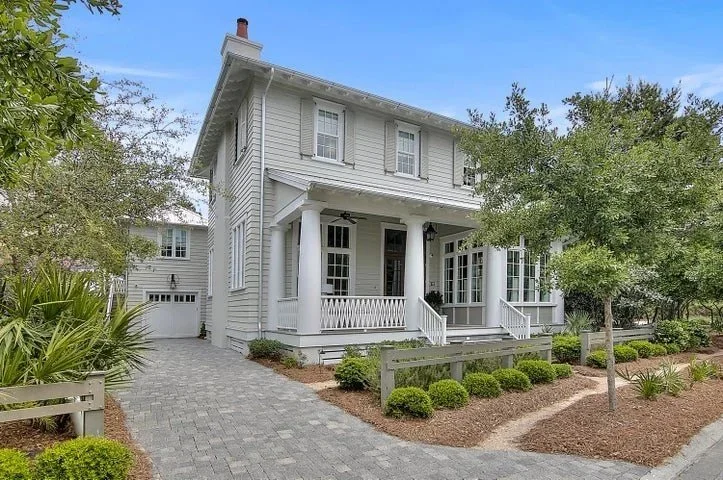
A carriage house is one of the most valuable program elements available on a WaterColor homesite. For buyers who want rental income, private guest accommodations, or a flexible space that can serve different purposes over time, it's often the decision that makes a WaterColor build significantly more useful — and significantly more valuable at resale.
But a carriage house in WaterColor is not simply a matter of adding a structure to the back of the lot. It's subject to the same Pattern Book review and ARB approval process as the primary home. It has its own design requirements, its own setback and size limitations, and its own relationship to the primary residence that must be carefully considered from the earliest stages of design.
This guide covers what the Pattern Book requires, what the ARB is looking for, and what buyers should understand about carriage houses in WaterColor before they commit to the program.
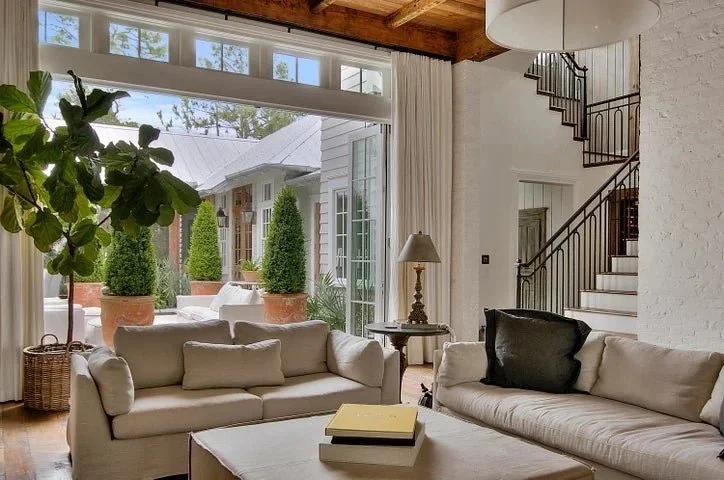
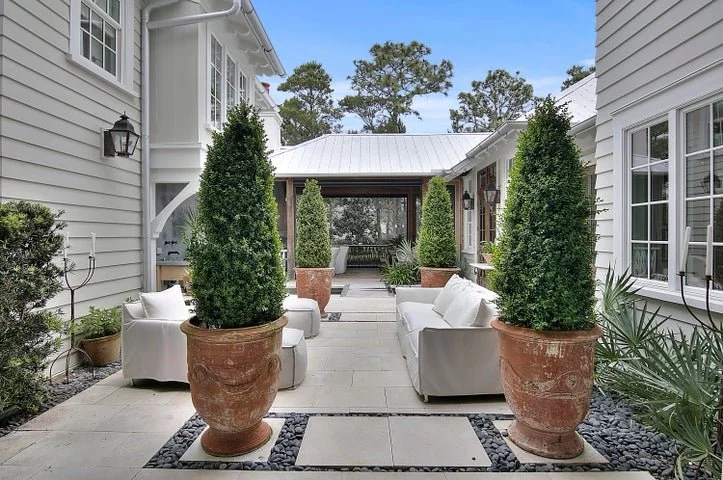
what is a carriage house in watercolor?
In WaterColor's design vocabulary, a carriage house is a detached accessory structure — typically positioned at the rear of the lot, accessed from the alley rather than the primary street frontage. It usually includes a garage or covered parking at the ground level with living space above: a studio, one-bedroom, or occasionally two-bedroom unit depending on the lot size and program.
The term comes from the new urbanist tradition that WaterColor is built on. In traditional neighborhood design, carriage houses served the same function they do today — secondary dwelling units positioned to the rear of the primary home, accessed from a rear lane, that kept garage doors and service functions off the primary street frontage. WaterColor's alleys are designed specifically with this in mind.
Not every WaterColor homesite can accommodate a carriage house. Lot size, setback requirements, impervious surface limits, and the size of the primary home all affect whether a carriage house is feasible on a given site. Understanding this before purchasing is important — particularly for buyers whose program depends on having a carriage house.
Why Buyers Want Carriage Houses in WaterColor
The motivations vary by buyer, but they tend to fall into three categories.
Rental Income
WaterColor permits short-term vacation rentals, and a well-designed carriage house on a WaterColor lot can generate meaningful rental income independently of the primary home. A carriage house that sleeps four to six guests — with a full kitchen, private outdoor space, and quality finishes — performs well in the 30A vacation rental market year-round. For buyers who intend to use the primary home personally for part of the year, a carriage house that rents independently can offset carrying costs significantly.
Private Guest Accommodations
For buyers whose primary motivation is personal use rather than rental income, a carriage house provides guest accommodations that are private in a way that an interior guest suite simply isn't. Visiting family or friends have their own entrance, their own living space, and their own outdoor area — without being in the primary home. For buyers who entertain regularly or have family who visit for extended periods, this separation is genuinely valuable.
Flexibility Over Time
A carriage house that serves as a rental unit today can become a home office, an art studio, a caretaker's quarters, or a long-term rental for a different stage of life. The flexibility of a well-designed secondary structure is one of its most underappreciated assets — particularly for buyers who are thinking about how the property will serve them over decades rather than just in the first few years.
Read our full builder guide on building in Watercolor.
What the Pattern Book Requires for Carriage Houses
The Pattern Book's requirements for carriage houses in WaterColor are specific and must be understood before design begins. The following are the most significant considerations.
Architectural Compatibility with the Primary Home
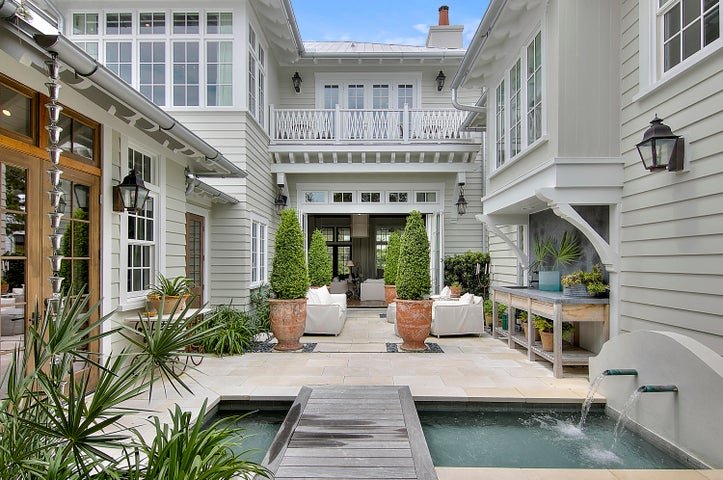
A carriage house in WaterColor must be architecturally compatible with the primary residence. This doesn't mean it has to be identical — but it must use the same or complementary exterior materials, the same roofline vocabulary, and a color palette that reads as intentionally related to the primary home rather than an afterthought.
The ARB evaluates the primary home and carriage house together as a site composition. A primary home with standing seam metal roofing and fiber cement board and batten siding needs a carriage house that reflects those choices — not one that feels like it was designed independently and dropped onto the rear of the lot.
Scale and Massing
The Pattern Book establishes parameters for the size and massing of carriage houses relative to the primary home and the lot. A carriage house cannot visually dominate the rear of the lot or create a massing that competes with the primary residence when viewed from the alley or adjacent properties.
This affects how the living space above the garage is configured — ceiling heights, roofline profiles, dormers, and window placement all need to be designed with the Pattern Book's massing expectations in mind.
Garage Door Orientation and Alley Access
In WaterColor, carriage house garages are accessed from the rear alley — not from the primary street frontage. This is a foundational new urbanist principle that the Pattern Book enforces without exception. Garage doors must face the alley, and the design of the garage frontage — door style, material, and proportion — is subject to ARB review.
Carriage house garage doors that face the street are not permitted. Buyers who purchase lots without alley access need to understand that a traditional carriage house configuration may not be possible on that site.
Setbacks
Carriage houses are subject to rear and side yard setback requirements that are separate from those governing the primary home. On smaller WaterColor lots, these setbacks can significantly constrain the footprint of the carriage house — affecting both the garage size and the living area above it.
Understanding the setbacks that apply to a specific lot before designing the carriage house program is essential. A program that assumes a two-car garage with a generous one-bedroom unit above may not be achievable on every site. Early site analysis with an architect familiar with WaterColor's requirements will identify what's possible before design work begins.
Impervious Surface Limits
Adding a carriage house to a WaterColor lot adds impervious surface — the footprint of the structure itself, plus any driveway or hardscape connecting it to the alley. On smaller lots, the combined impervious surface of the primary home, pool area, driveways, and carriage house can push against or exceed the lot's limits.
This is one of the most common planning constraints on WaterColor carriage house projects and one of the most important to identify early. A site plan that accounts for all impervious surfaces — including future pool and landscape plans — before the carriage house design is finalized avoids the frustrating situation of having to reduce the program later because the numbers don't work.color palettes
The Pattern Book establishes a curated palette of approved exterior colors for WaterColor homes. These are not arbitrary restrictions — they reflect the tonal range of the natural environment surrounding the community: the warm sand, the Gulf water, the native vegetation, the coastal light.
Approved colors tend toward muted, natural tones — soft whites, warm grays, coastal blues and greens, sandy neutrals, and deep charcoals. Bright, saturated colors — vivid yellows, strong reds, loud blues — are generally outside the approved palette.
Trim colors are also specified and must be selected in combination with the primary body color to ensure a coherent, Pattern Book-compliant exterior color scheme.
Color selections must be submitted to the ARB as part of the design review. Paint chips or manufacturer color specifications are typically required. Buyers who have strong opinions about exterior color — and many do — should review the approved palette early in the design process to ensure their preferences are achievable within the community's guidelines.
For more about the Watercolor Pattern Book process, visit our full blog here.
Design Considerations That Maximize Carriage House Value
Beyond what the Pattern Book requires, there are design decisions that meaningfully affect how useful, livable, and valuable a carriage house is — whether the goal is rental income, personal use, or both.
Separate Entrance and Private Outdoor Space
A carriage house that functions well as a rental or guest unit needs a private entrance that doesn't require walking through the primary home or its outdoor living area. A dedicated exterior stair, a private entry courtyard, or a covered landing that creates a sense of arrival for the carriage house unit are all worth designing carefully. The quality of this arrival sequence affects both the rental experience and the sense of privacy for guests.
Full Kitchen vs. Kitchenette
For buyers who intend to rent the carriage house independently, a full kitchen — with a proper range, full-size refrigerator, and adequate counter and cabinet space — performs significantly better in the vacation rental market than a kitchenette. Guests expecting a week-long stay want the ability to cook real meals. The additional cost of a full kitchen over a kitchenette is modest relative to the difference in rental appeal and nightly rate.
Sleeping Capacity
In the vacation rental market, sleeping capacity drives revenue. A carriage house that sleeps six guests — through a combination of a proper bedroom, a sleeper sofa, and perhaps a bunk configuration — will outperform one that sleeps two or three. This affects how the living space is programmed and how rooms are sized, and it's worth thinking about explicitly if rental income is part of the motivation.
Storage
Carriage house units — whether used as rentals or guest accommodations — benefit from dedicated storage for beach equipment: chairs, umbrellas, paddleboards, bicycles. A ground-floor storage room adjacent to or within the garage, accessible from the exterior, is a practical addition that most buyers appreciate immediately and that renters notice.
Quality of Finish
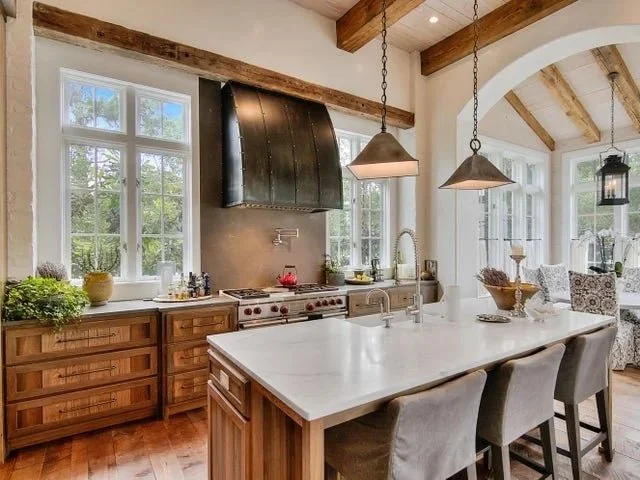
The WaterColor rental market attracts guests with high expectations. A carriage house with builder-grade finishes will be competitively disadvantaged against the increasingly well-appointed properties on 30A. Investing in quality tile, cabinetry, lighting, and plumbing fixtures in the carriage house — at a level consistent with the primary home — protects rental income and resale value.
The ARB Submission for a Carriage House
The ARB reviews the carriage house as part of the overall site submission — it is not submitted or approved separately from the primary home. This means the carriage house design needs to be sufficiently developed at the time of the primary home submission to allow the ARB to evaluate the full site composition.
Buyers who decide to add a carriage house mid-design — after the primary home plans are already well-developed — often find themselves revising both sets of plans to ensure the two structures work together architecturally. Starting with both the primary home and carriage house in the program from the beginning of the design process is significantly more efficient.
The ARB submission for a site with a carriage house typically includes elevations of all four sides of both structures, a site plan showing the relationship between the two buildings, alley access and garage door placement, and material and color specifications for both. Landscape plans that show the private outdoor space associated with the carriage house are also typically required.
Is a Carriage House Right for Your WaterColor Build?
The honest answer is: it depends on your lot, your program, and your priorities.
For buyers with a lot large enough to accommodate a carriage house without compromising the primary home's outdoor living space, and whose program includes either rental income or regular guest use, a carriage house almost always makes sense. The cost to build it during the primary construction is significantly lower than adding it later, and the value it adds — in livability, flexibility, and resale — consistently justifies the investment.
For buyers on smaller lots, or buyers whose outdoor living space would be materially compromised by adding a carriage house, the calculus is different. A cramped carriage house on an over-built lot serves nobody well — not the owner, not the guests, and not the resale buyer.
Getting that analysis right requires a team that has worked through this decision on multiple WaterColor homesites — one that knows what's achievable on a given lot, what the Pattern Book will and won't support, and how to design a carriage house that adds value rather than consuming the lot.
To learn more about building in the community, visit our full guide here.
Minchew | Design + Build has designed and built carriage houses on multiple WaterColor homesites, navigating the Pattern Book requirements and ARB process that make this community unique. If you're considering a WaterColor build and want to understand whether a carriage house makes sense for your specific site and program, reach out to start the conversation.