Short-Term Rental Performance in WaterColor: What Custom Home Buyers Should Understand
WaterColor is one of the few communities on 30A where short-term vacation rentals are permitted — and that single fact shapes a meaningful portion of the decisions buyers make when they choose to build here. For some, rental income is the primary financial justification for the investment. For others it's a secondary consideration — a way to offset carrying costs when the home isn't in personal use. And for some buyers it's not a consideration at all.
Regardless of where you fall on that spectrum, understanding how the short-term rental market actually works in WaterColor — what drives performance, what the market expects, and how design decisions made during construction affect revenue for the life of the home — is useful information for anyone building here.
This guide is not a rental income projection or a financial guarantee. It's a practical overview of the factors that separate high-performing WaterColor rentals from average ones, written specifically for buyers who are in the process of designing and building a custom home in the community.
WHY WATERCOLOR IS A STRONG RENTAL MARKET
The 30A corridor is one of the most sought-after vacation destinations in the Southeast. Its combination of white sand beaches, coastal dune lakes, walkable communities, and a consistently high quality of food, retail, and recreation has made it a repeat destination for families and couples from Atlanta, Nashville, Birmingham, Dallas, and beyond — markets with strong disposable income and a cultural affinity for the Gulf Coast.
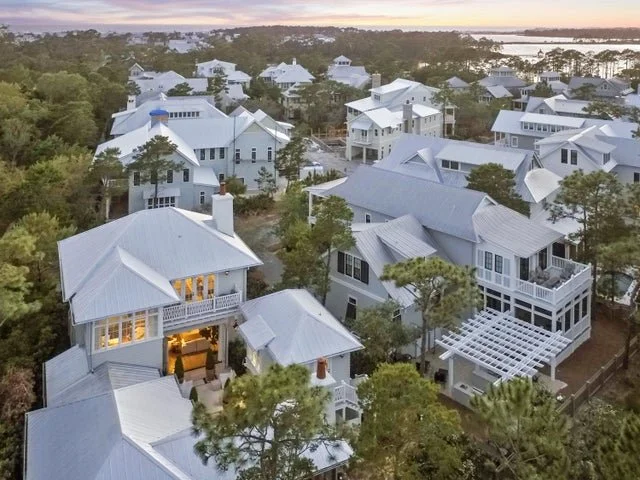
Within 30A, WaterColor occupies a premium position. It offers direct beach access through the WaterColor Beach Club, a resort-style pool complex, tennis facilities, miles of bike paths, and a walkable town center with restaurants and retail. For vacation renters — particularly families — it checks every box.
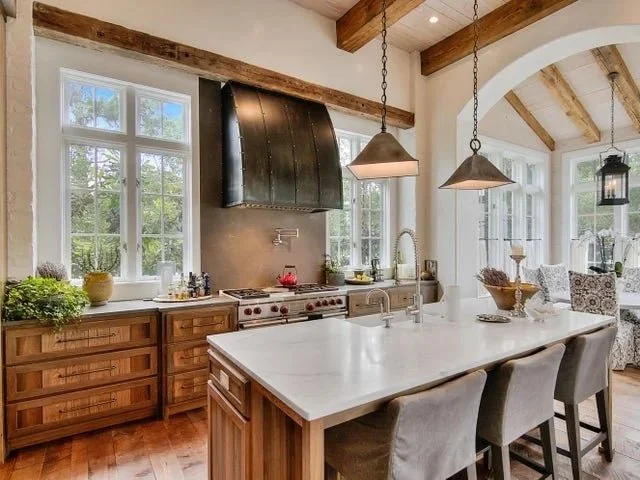
This combination of community amenities, beach access, and architectural character creates consistent demand that supports strong occupancy rates and above-average nightly rates relative to the broader 30A market. Well-designed, well-appointed homes in WaterColor are not struggling to find renters. The demand exists. The question is how much of it any given home captures — and that is almost entirely a function of how the home is designed, finished, and managed.
What Drives Rental Performance in WaterColor
Sleeping Capacity
In the vacation rental market, sleeping capacity is the single most important driver of nightly rate and gross revenue. A home that sleeps twelve guests commands a significantly higher nightly rate than one that sleeps six — and the occupancy difference between the two is minimal, because larger groups are actively searching for homes that can accommodate them and have fewer options to choose from.
For custom home buyers in WaterColor, this means sleeping capacity should be a deliberate design decision — not an afterthought. The number of bedrooms matters. But so does how those bedrooms are configured. A four-bedroom home where each bedroom has two queen beds sleeps eight guests. The same four bedrooms with one queen each sleep four. The floor plan is the same. The revenue potential is not.
Bunk rooms are among the most consistently requested features in the WaterColor rental market. A well-designed bunk room — with built-in bunks, individual reading lights, personal storage for each occupant, and its own bathroom — is not a budget feature. It's a revenue driver. Families with children actively seek homes that offer this accommodation, and they pay for it.
Outdoor Living Quality
The WaterColor rental guest is not spending the majority of their time indoors. They're on the beach, at the pool, on the bike paths — and when they're at the home, they're outside. The quality of the outdoor living space is among the top two or three factors that determine rental performance in this market.
A private pool is essentially table stakes for a high-performing WaterColor rental at the custom home price point. Guests searching in this market expect a pool. Homes without one are immediately filtered out by a significant portion of renters before they even look at the photos.
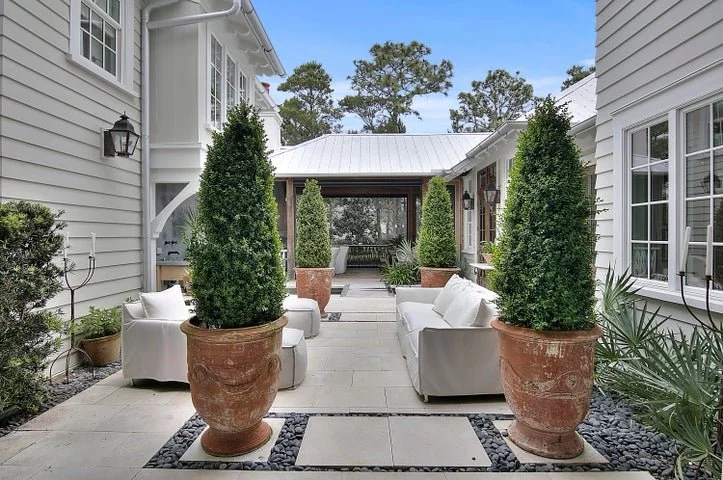
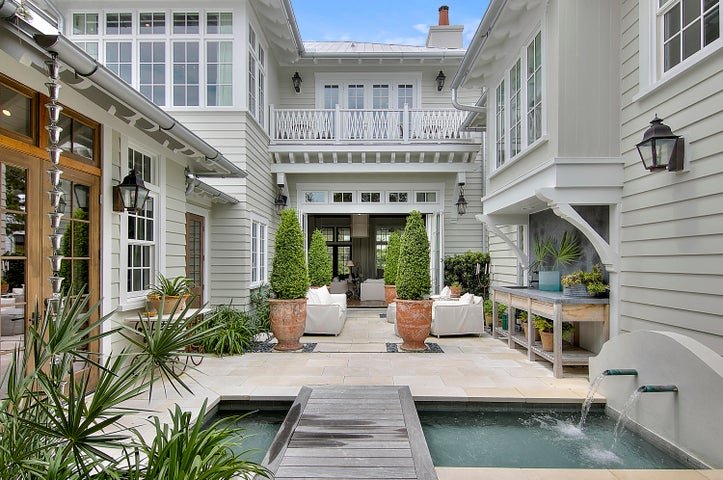
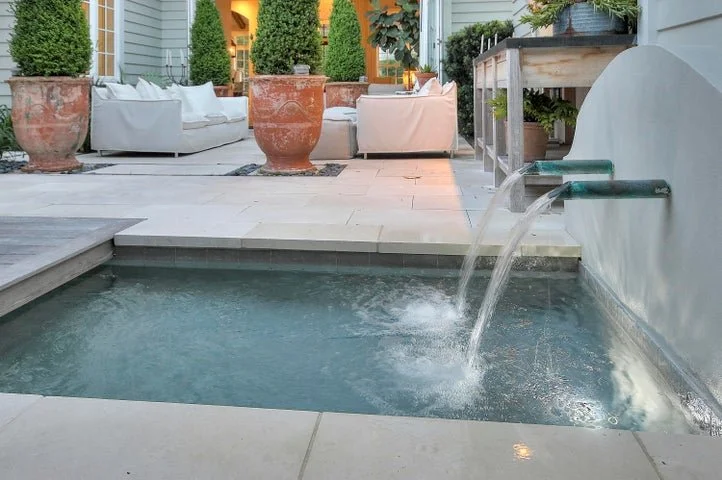
Beyond the pool, the quality of the outdoor entertaining area matters. A covered outdoor kitchen, a dining area that seats the full party, a comfortable lounge area adjacent to the pool — these are the features that generate five-star reviews and repeat bookings. They're also the features that justify premium nightly rates.
The front porch — required by WaterColor's Pattern Book for every primary residence — is an asset in the rental context as well. A deep, furnished front porch that faces a quiet WaterColor street contributes to the experience renters are paying for: the sense of being in a place, not just a house.
Proximity to the Beach Club and Amenities
Location within WaterColor affects rental performance. Homes within walking distance of the WaterColor Beach Club, the main pool complex, and the town center command higher nightly rates and stronger occupancy than homes in more remote parts of the community — all else being equal.
For buyers choosing a homesite with rental performance in mind, proximity to amenities is worth factoring into the site selection decision. A homesite that requires a bike ride to the beach club is not necessarily a poor rental performer — but it will be priced and positioned differently in the market than one within a five-minute walk.
Finish Level and Photography
The WaterColor vacation rental market is visual. Guests make booking decisions based on photography, and photography is a direct reflection of the quality of the interior finishes and furnishing.
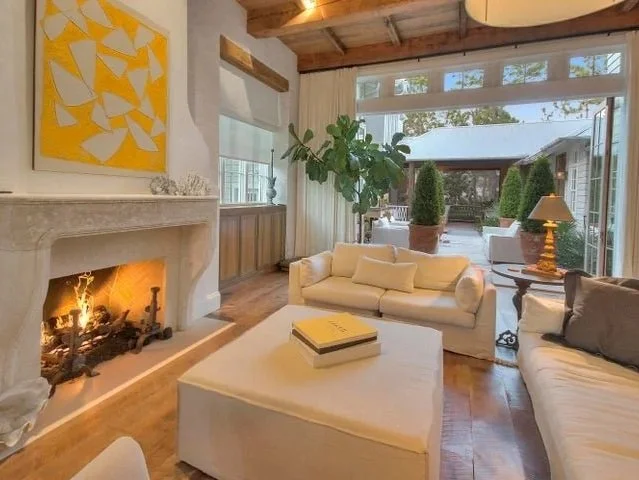
A custom home with designer interiors, quality furniture, high-end kitchen appliances, and thoughtful lighting photographs dramatically better than one with builder-grade finishes and generic furnishings — and that photography difference translates directly into nightly rate and occupancy.
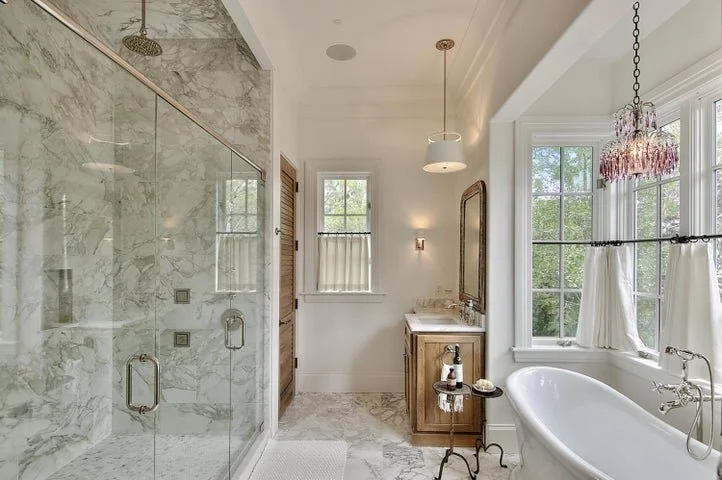
This is not a case for extravagance. It's a case for intentionality. Buyers who are building with rental performance in mind should think about the finish level of every room that will be photographed — which is every room — and make decisions accordingly. The return on investment for a well-finished, well-furnished WaterColor rental is real and measurable.
Reviews and Repeat Bookings
In the short-term rental market, reviews are currency. A WaterColor home with fifty five-star reviews and a Superhost designation on Airbnb is a fundamentally different business than a new listing with no reviews — even if the homes are physically identical.
This means that the first year of a rental operation is the most important. The guests who stay in that first year generate the reviews that determine the home's market position for years afterward. Delivering an exceptional experience in that first year — through the quality of the home, the responsiveness of the management, and the attention to the details that generate reviews — is an investment in the long-term revenue performance of the property.
Buyers who are planning to rent should factor this into their timeline. A home that opens for rentals in peak season with professional photography, a complete furnishing package, and a responsive property manager is set up to succeed. One that opens mid-season with incomplete furnishings and a learning-curve management situation is not.
Read our full builder guide on Watercolor here.
How Design Decisions During Construction Affect Rental Performance
The most important thing a buyer building with rental intent can understand is this: the design decisions made during construction are the ones that are hardest and most expensive to change later. Getting them right from the beginning is significantly more valuable than trying to optimize a finished home after the fact.
Bedroom and bathroom count. More bathrooms relative to bedrooms improves the rental experience and the review scores. A home where guests are sharing bathrooms across multiple rooms generates complaints. A home where every bedroom has direct bathroom access — or where the ratio of bathrooms to guests is generous — does not. This is a plumbing and floor plan decision made during construction. It cannot be meaningfully addressed afterward.
Pool size and configuration. A pool that is too small for the number of guests the home sleeps is a recurring complaint in reviews. A pool designed for a family of four that serves twelve rental guests every week will generate negative feedback. Sizing the pool relative to the home's sleeping capacity — and configuring the pool deck to accommodate the full party in a comfortable outdoor seating arrangement — is a design decision with long-term revenue implications.
Storage for beach equipment. Families renting in WaterColor arrive with beach chairs, umbrellas, coolers, paddleboards, and bicycles. A home with no dedicated storage for this equipment creates immediate friction. A ground-floor storage room — accessible from the exterior, large enough to hold the equipment a full party brings — is a modest construction cost that generates outsized goodwill from renters.
Laundry capacity. A single standard washer and dryer serving a home that sleeps twelve is a bottleneck that guests notice and mention in reviews. Two sets of laundry equipment — or a commercial-capacity washer and dryer — is a detail that high-performing vacation rentals in this market increasingly offer and that guests increasingly expect.
Outdoor shower. Standard in the beach market, but the quality of the outdoor shower matters. A well-designed, enclosed outdoor shower with hot water, adequate pressure, and proper drainage is a small detail that gets mentioned in positive reviews with surprising frequency. A poorly designed one generates complaints.
Smart home technology. Keyless entry, smart thermostats, and reliable high-speed WiFi are baseline expectations for vacation renters in this market. They should be planned and installed during construction rather than retrofitted afterward.
The Carriage House as a Rental Asset
As covered in a separate guide on carriage houses in WaterColor, a detached carriage house unit can function as an independent rental — booked separately from the primary home, generating its own revenue stream.
For buyers with a lot that can accommodate a carriage house, this is one of the most compelling financial arguments for including it in the build program. Two rental units on one lot — the primary home and the carriage house — with the ability to rent them independently or together to a larger group give a WaterColor property unusual flexibility and revenue potential.
The carriage house rental performs best when it is designed as a complete, self-contained unit — with a full kitchen, private entrance, private outdoor space, and finishes consistent with the primary home. A carriage house that feels like a secondary, lower-quality option relative to the main house will be priced and reviewed accordingly.
Property Management: What Buyers Should Know
A well-designed, well-finished WaterColor home with poor property management will underperform. The management layer — guest communication, cleaning turnover, maintenance response, pricing optimization, and listing management — affects revenue as directly as the home's physical qualities.
The 30A market has a range of property management options, from large national platforms to local boutique managers who specialize in the WaterColor and 30A market specifically. Local managers with deep market knowledge — who understand WaterColor's seasonal patterns, pricing dynamics, and guest expectations — generally outperform national platforms that treat 30A as one market among hundreds.
For buyers who intend to self-manage, the tools available — Airbnb, VRBO, dynamic pricing software, and guest communication platforms — have made self-management more feasible than it was five years ago. But self-management is a time commitment that should be evaluated honestly before the home opens for rentals.
A Note on Personal Use and Rental Balance
Most custom home buyers in WaterColor are not building pure investment properties. They're building homes they intend to use personally — for family vacations, extended stays, and the lifestyle that drew them to 30A in the first place — and renting the home when it's not in personal use.
This is a reasonable and common approach. But it requires honest planning. The weeks with the highest rental demand — the weeks that generate the most revenue — are also the weeks when personal use is most tempting. Fourth of July, spring break, and the peak summer weeks in July and August command nightly rates that are two to three times the shoulder season average. Blocking those weeks for personal use has a measurable revenue cost.
Buyers who are counting on rental income to support the economics of the investment should model their personal use calendar honestly before they close — and build a management strategy around it before the home opens for rentals.
What This Means for Your Build
Building a custom home in WaterColor with rental performance in mind is not fundamentally different from building one without it. The same design principles apply — thoughtful architecture, quality materials, generous outdoor living, and spaces that serve the people who use them well.
The difference is intentionality. Buyers who think carefully about sleeping capacity, bathroom count, pool sizing, storage, and finish level during the design and construction process end up with homes that perform better in the rental market — not because they compromised on design, but because they made design decisions with the full picture in mind.
That kind of intentionality requires a builder who understands both the construction process and the market context — one who can flag the decisions that have long-term revenue implications and help owners make them well.
Minchew | Design + Build has built multiple custom homes in WaterColor and has a working understanding of what the community's rental market rewards. If you're considering a build in WaterColor and want to think through how design decisions affect rental performance, reach out to start the conversation.